Power Technical Services · Lineman’s Testing Laboratories
Arc Flash Hazard Risk Assessment and Mitigation for Ontario Facilities
Ensure regulatory compliance and worker safety. LTL’s CSA Z462-compliant arc flash studies tell you where the hazards are, how severe they are, and what your people need to wear to work safely.
Protect Workers · Improve Safety · Increase Efficiency · Ensure Compliance
What it does
What an Arc Flash Hazard Risk Assessment Tells You
An arc flash hazard risk assessment identifies every location in your electrical system where a worker could be exposed to an arc flash, and quantifies the hazard at each one. LTL’s engineers model your system, calculate the incident energy a worker would be exposed to at each piece of equipment, and set the boundaries and protective equipment that CSA Z462 requires for energized work.
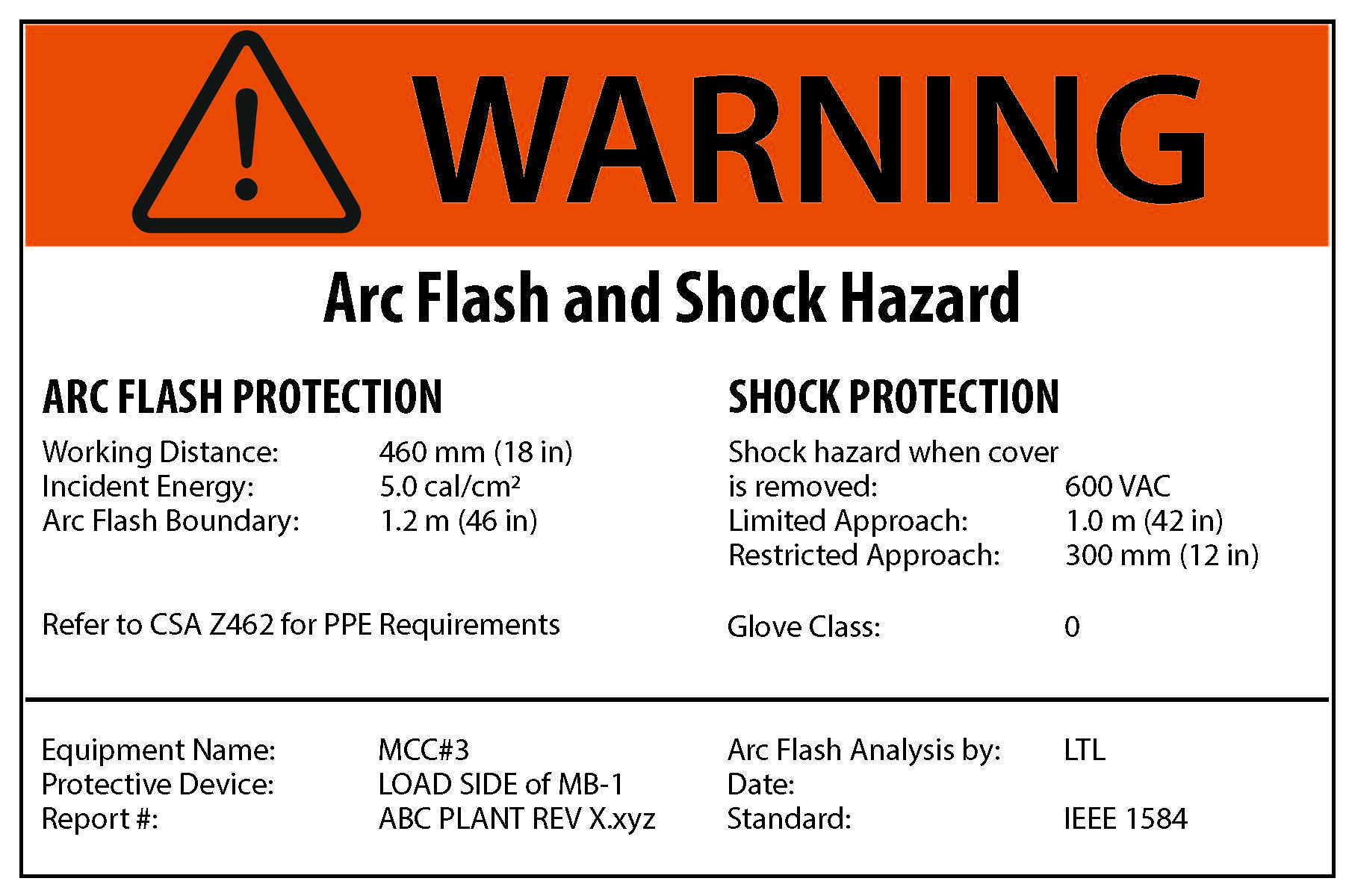
Incident-energy levels
The thermal energy, in cal/cm², a worker would receive at a defined working distance from each piece of equipment. This number drives every other decision.
Arc flash boundaries
The distance from the equipment at which incident energy drops to 1.2 cal/cm², the threshold for a second-degree burn. Inside it, arc-rated PPE is mandatory.
Shock-hazard boundaries
The limited and restricted approach boundaries for each voltage level, so workers know how close they can get and what qualifications and insulation they need.
Required PPE
The arc-rated clothing and equipment required for each task on each piece of equipment, matched to the calculated incident energy, so no one is under- or over-protected.
HOW IT WORKS
How to Prevent Arc Flash Hazards: The 5 Steps LTL Follows
Arc flash prevention is a program, not a one-time report. LTL’s approach follows the five steps recognized across CSA Z462 and NFPA 70E.
01
Perform an arc flash hazard analysis
Model the system, calculate incident energy and boundaries, and label the equipment. This is the foundation; everything else depends on it.
02
Develop an electrical safety program
Turn the study into written procedures: who is qualified, what work is permitted energized, how tasks are planned and approved.
03
Ensure adequate engineering controls
Reduce the hazard at the source where the study shows it is practical: protective-device settings, maintenance-mode switching, remote operation, equipment upgrades.
04
Communicate safety procedures
Labels on the equipment, procedures in the hands of the crew, and a clear line from the study results to the daily job briefing.
05
Provide ongoing training, auditing and program improvement
Train workers to the standard, audit the program, and update the study when the system changes or on the review cycle CSA Z462 requires.
WHAT’S INCLUDED
What LTL’s Arc Flash Hazard Study Includes
Performed by LTL’s qualified engineers and technicians, the Arc Flash Hazard Study is a complete engineering deliverable, from data collection on site to labels on the equipment.
Complete engineering services
Licensed engineering oversight from scope to sign-off.
Site assessment and data collection
LTL technicians gather equipment, conductor and protective-device data on site; you do not need to compile it yourself.
Single-line diagrams
Existing drawings verified and updated, or created where none exist.
Short-circuit and protective-device coordination studies
Fault levels calculated and protective devices coordinated so the study reflects how your system actually clears a fault.
Labeling
Warning labels identifying the potential hazard and the required PPE, affixed to all applicable electrical equipment.
Easy-to-read, detailed arc flash analysis report
Results by equipment, recommendations to reduce incident energy, and the documentation an inspector or auditor expects.
ONE SUPPLIER
Labels, PPE and Training from One Supplier
The study determines the PPE; LTL supplies it. Since 1958 LTL has stocked arc flash clothing and accessories, insulating rubber gloves and related equipment, and our staff advise on proper care, inspection and maintenance in line with applicable legislation. Training closes the loop: workers need to understand how and why the required PPE protects them, and how to care for and inspect it.
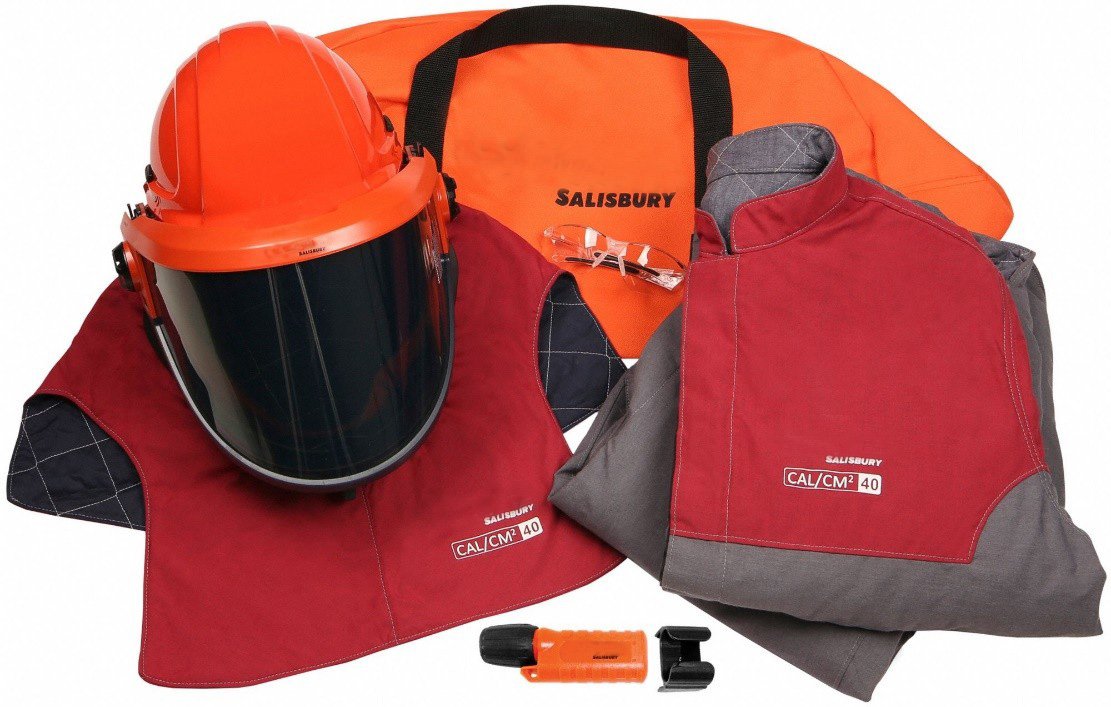
Arc-rated PPE supply
Arc flash clothing, hoods and accessories, insulating rubber gloves and related equipment, matched to the PPE categories in your study.

Classroom arc flash awareness training
Delivered to current industry standards and codes: OHSA, CSA Z462, NFPA 70E and ASTM.
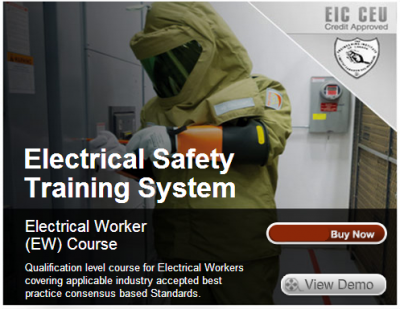
Online electrical safety training
Two programs through LTL’s Electrical Safety Training System (ESTS): one for electrical workers and one for non-electrical workers.
RISK REDUCTION
What an Arc Flash Safety Program Protects Against
By implementing LTL’s Arc Flash Safety Program you significantly reduce the risk of equipment damage, production downtime and rising insurance premiums, and, most importantly, you protect the lives of workers.
Worker injury
The purpose of the program. Correct boundaries and PPE are the difference between a near miss and a life-changing burn.
Equipment damage
An arc fault can destroy switchgear that takes months to replace. Coordination studies and engineering controls limit the energy released.
Production downtime
Unplanned outages after an incident, or shutdowns forced by an inspector, cost far more than the study.
Insurance and liability
A documented, current, CSA Z462-compliant program is what insurers, auditors and regulators ask to see.
WHO IT’S FOR
Who Needs an Arc Flash Risk Assessment in Ontario
Any workplace where people operate, maintain or troubleshoot energized electrical equipment of 30 volts or more: industrial plants, commercial and institutional buildings, utilities and utility contractors, data centres, hospitals, municipalities and school boards. If your facility has never had a study, if equipment or protective settings have changed since the last one, or if the last study is approaching its review date, this is the time to book it.

Industrial & manufacturing

Commercial & institutional

Utilities & contractors

Healthcare & data centres

Municipal & education
OUR SERVICES
More Power Technical Services from LTL
We’re here when you need us. LTL’s Power Technical Services team supports commercial, industrial and utility sites across Ontario with:
FAQ
Arc Flash Hazard Risk Assessment: Common Questions
GET STARTED
Request an Arc Flash Hazard Risk Assessment
Call or email to learn more about a customized program tailored to your facility’s needs, or send us the basics below and a Power Technical Services engineer will follow up.